Verse 11after 1816aariihaa))e haa))e
G1
1
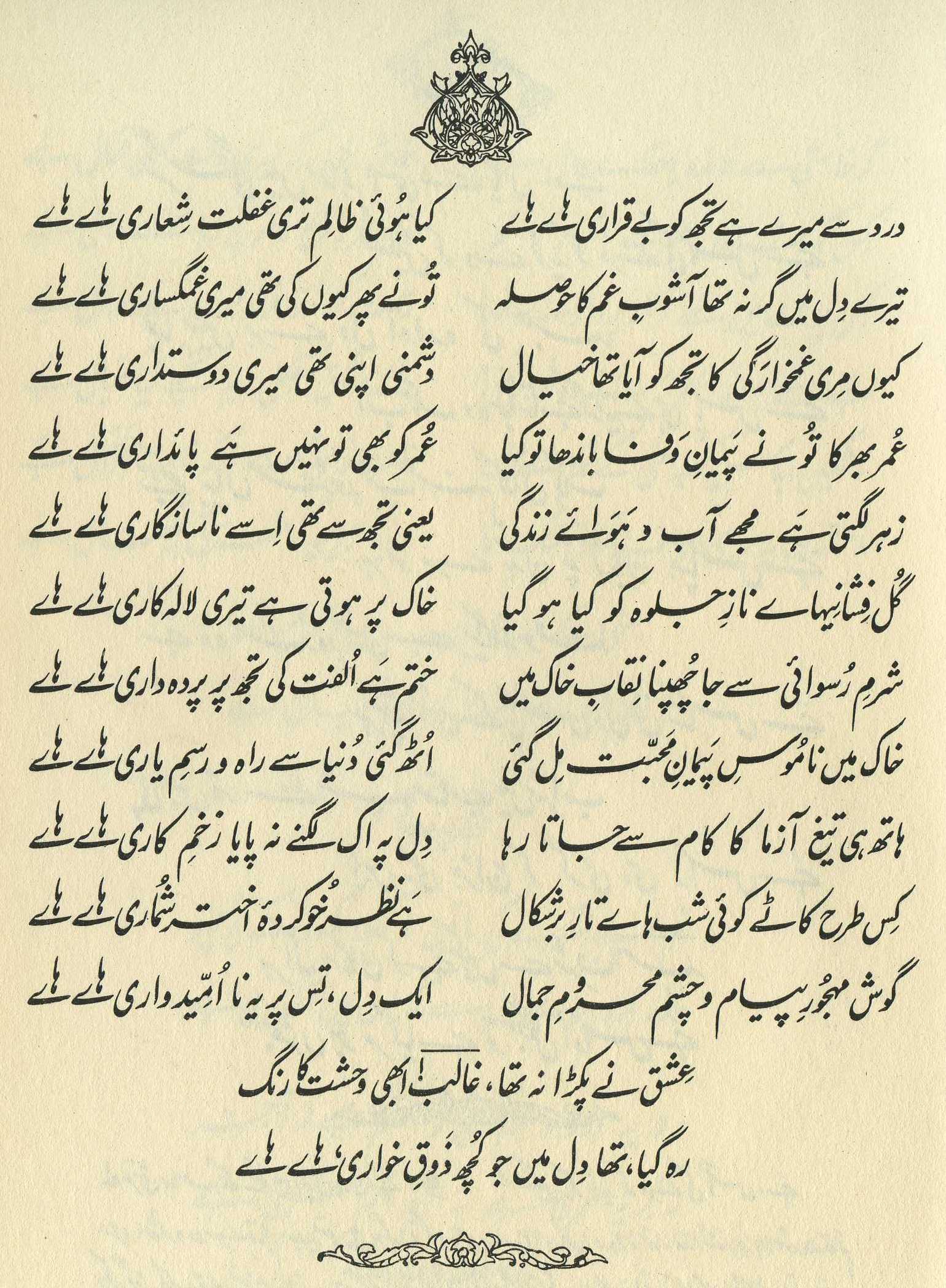
the ear is separated from a message; and the eye, deprived of beauty
2
a single heart, concerning which-- this non-hopefulness-- alas!
| References | |
|---|---|
| Arshi, Imtiyaz Ali | Ghazal# 136 |
| Raza, Kalidas Gupta | 297-98 |
| Nuskhah-e-Hamidiyah | 187-188 |
| Asi, Abdul Bari | 218 |
| Hamid Ali Khan | Open Image |
Atish and Nasikh , etc., among the poets of Lucknow, and in Delhi Zauq and Momin , etc. are to some extent earlier than the author's time. is not in the poetry of any of them. And neither has this phrase been used in Lucknow speech for a long time. For this word to emerge from the author's pen is a cause of astonishment-- and this word bears witness that the late Mirza Naushah [Ghalib]'s language was to some extent separate from the language of Delhi. (150)
== Nazm page 149 ; Nazm page 150


He says, the ears are absorbed in separation from the beloved's message, and the eyes have become deprived of the beloved's beauty. My heart alone [] is calling down the disasters of these two troubles of hopelessness. (206)
A single heart, and so many deprivations.... [Contrary to Nazm's claim], occurs in the poetry of Nasikh, may God's mercy be upon him. And the Delhi people say it to this day. [Examples from Nasikh, Mir Dard , and Insha .] (273)
For extensive commentary on this whole very unusual ghazal, see 139,1 .
For a far more complexly Ghalibian treatment of the eye versus the ear, see 169,2 .
Also, why instead of ? Normally we wouldn't suspect Ghalib of making do with any casually convenient word just for the sake of the refrain; but then, this isn't a normal ghazal.
graphics/lostheart.jpg