Verse 13xafter 1816aariihaa))e haa))e
G1
1
if there was trouble, then if only I had endured it abroad, Asad !
2
in only/emphatically Delhi this wretchedness had to happen to me-- alas!
'Travelling (to foreign countries), going abroad; emigration; — being far from (one's) home or native country; the state or condition of a stranger, or foreigner, or exile; wretchedness, misery; humility, lowliness'.
'Contemptibleness, meanness, baseness, vileness; abjectness, friendlessness, wretchedness, distress'.
| References | |
|---|---|
| Arshi, Imtiyaz Ali | Ghazal# 136 |
| Raza, Kalidas Gupta | 297-98 |
| Nuskhah-e-Hamidiyah | 187-188 |
| Asi, Abdul Bari | 218 |
| Hamid Ali Khan | Open Image |
Oh Asad, if there was trouble, then if I had only endured it abroad-- no one would have known, no one would have been aware! But the great trouble is that in my homeland-- that is, in Delhif-- I became wretched/contemptible. What a pity, what a pity! Mirza has also composed this thought like this: 83,1 . Other poets too have expressed this thought in a very subtle/enjoyable manner.
== Asi, p. 218
This closing-verse is separate from the preceding verse-set . It is related to some other event.
== Zamin, p. 324
For background see S. R. Faruqi's choices . This verse is NOT one of his choices; for the sake of completeness, I have added it myself. For more on Ghalib's unpublished verses, see the discussion in 4,8x .
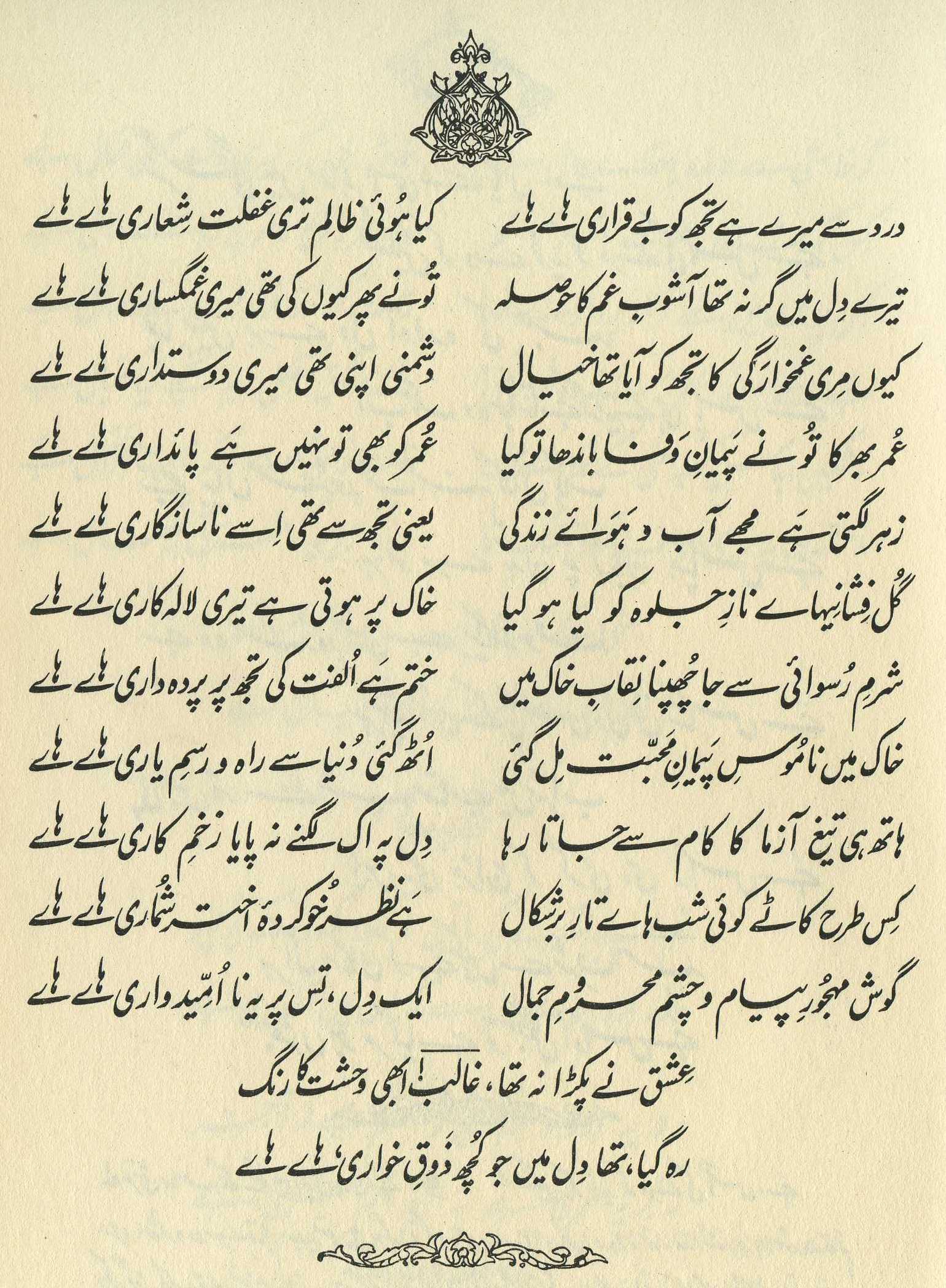
Apparently this closing-verse was the original one, and was then replaced in the divan by 139,12 , which used the same rhyme -word but had 'Ghalib' rather than 'Asad'. Maybe Ghalib later decided that this verse had a somewhat petulant tone ('it's all about me!'), so he did not wish to include it. (This solipsistic quality is probably why Zamin considers the present verse to be about 'some other event' entirely, rather than the death of a beloved mistress.) Or else perhaps Ghalib was simply juggling pen-name s, and didn't give it much thought.
The verse doesn't add much to any biographical understanding of the ghazal: since Ghalib spent almost his whole adult life in Delhi, any affairs he had were likely to have taken place there anyway. But it does offer a bit of wordplay, since can mean either 'foreignness, exile' or 'misery, lowliness' (see the definition above).
graphics/lostheart.jpg