Verse 7after 1816aariihaa))e haa))e
G1
1
from the shame of disgrace/revealedness, to go and hide in the veil of dust--
2
with you is the end/culmination of the concealment of love-- alas!
'Dishonoured, disgraced, infamous, ignominious; humiliated; open, notorious; accused; one held up to public view, as an example to deter'. (Steingass p.576)
'Concealing (a blemish), conniving at (a fault or offence); keeping one's secret; preserving confidence'.
| References | |
|---|---|
| Arshi, Imtiyaz Ali | Ghazal# 136 |
| Raza, Kalidas Gupta | 297-98 |
| Nuskhah-e-Hamidiyah | 187-188 |
| Asi, Abdul Bari | 218 |
| Hamid Ali Khan | Open Image |
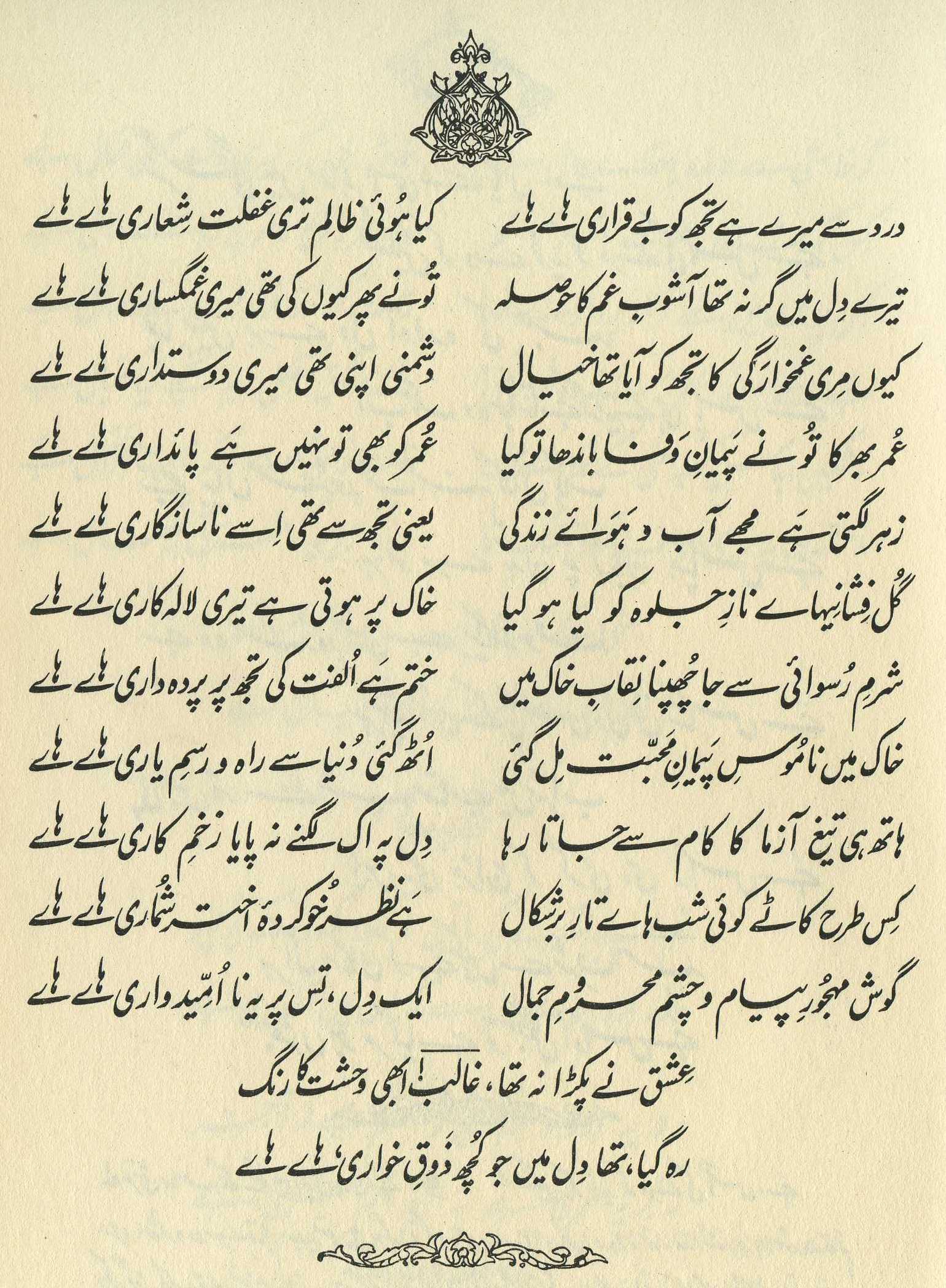
That is, having hidden herself from people, she gave me a promise of faithfulness for her lifetime; but from the shame of disgrace, she also killed herself []. (149)
== Nazm page 149

He says, from shame at being disgraced, you became a dweller in the earth; and you placed the veil of dust over your face. In the world, who can be more pardah-observing than you? The meaning is that from the fear of disgrace, you killed yourself. (206)
From the fear of disgrace, the beloved gave up her life. He says that in order to remain in pardah, you hid your face in a veil of the dust of the grave. The truth is that the secret-keeping of love finds its end/culmination in you. (272)
For extensive commentary on this whole very unusual ghazal, see 139,1 .
Nazm and Bekhud Dihlavi seem sure that the beloved actually killed herself. The double meaning of as both 'culmination' and 'end' is nicely deployed, as is that of as both 'disgrace' and 'revealedness' (on this see 20,9 ).
graphics/lostheart.jpg