Verse 21821aatchaahiye
G3
1
even/also {you / we ourself} have become a lover of one more/other person
2
after all, some retaliation/recompense for cruelty is needed
'Compensation, reparation; recompense, requital; retribution; retaliation'.
'Is necessary, is needful or requisite, is proper or right'.
| References | |
|---|---|
| Arshi, Imtiyaz Ali | Ghazal# 180 |
| Raza, Kalidas Gupta | 361 |
| Nuskhah-e-Hamidiyah | 242 |
| Gyan Chand | 493 |
| Hamid Ali Khan | Open Image |
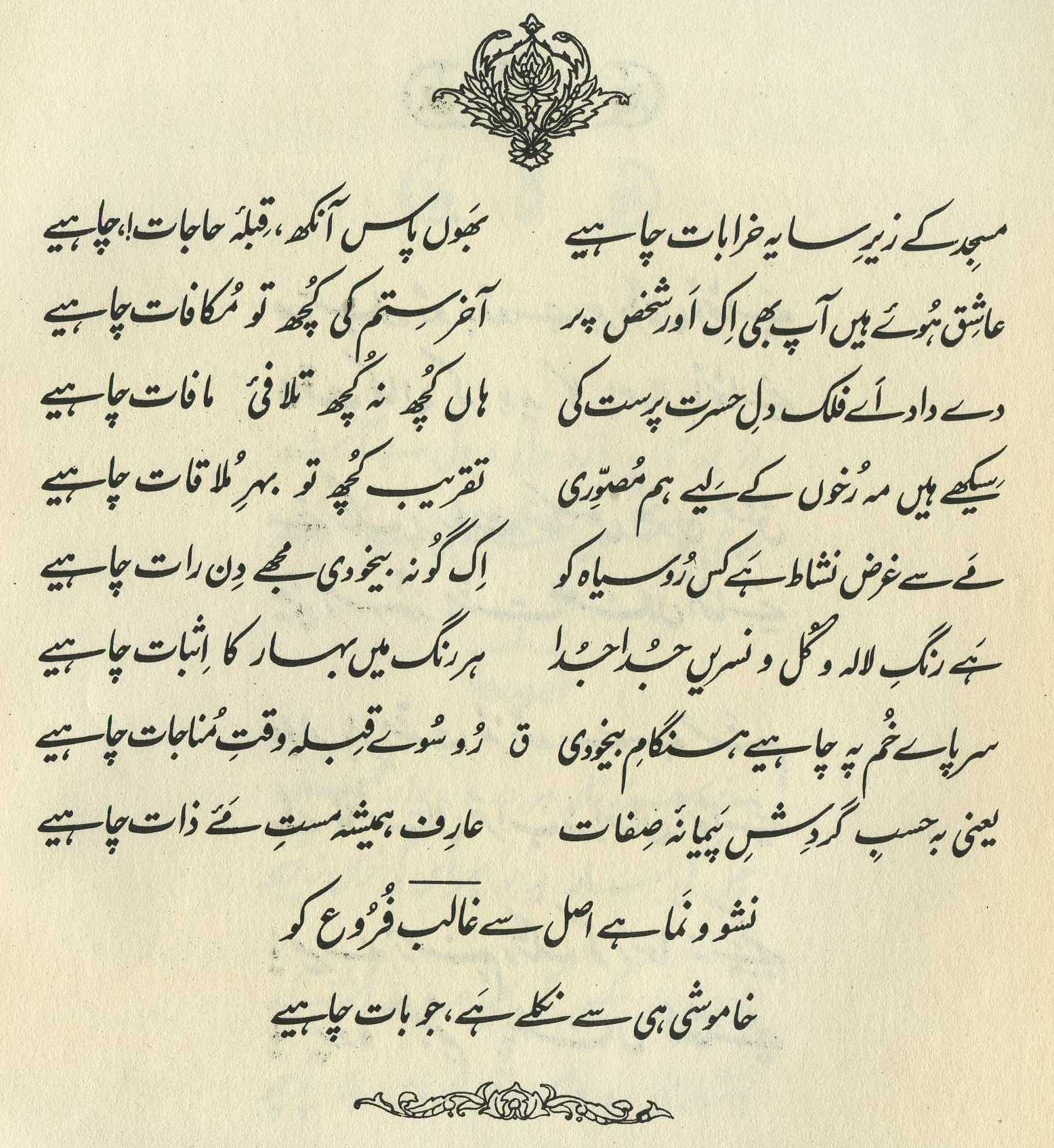
The poets of Lucknow don't compose [verses about] the beloved's becoming a lover of anyone else; and this theme too is among the rejected ones [], and in their view is bland []. (140)
== Nazm page 140

He says, 'The way we are your lover, in the same way you too have become a lover of some other person. And this secret has become evident to us. You've treated your lovers very cruelly and badly. Finally, some vengeance should be taken for this, by the Lord, upon you too.' (195)
'Some other person' is full of meaning. The interpretation emerges from it that because of envy and pride, it doesn't suit him to mention the name of the Rival . [Or else] the beloved herself knows-- so what need to mention the name? (260)
Compare 105,1 . (223)
This verse lays a clever trap; all the commentators I've read (and not just the ones cited above) have cheerfully walked into it and set up housekeeping. Obviously can be a formal address to 'you', the beloved, which is how all the commentators read it. But it can also mean 'oneself'. For an example of meaning 'we ourself', see 60,7 . For a very clear example of alone meaning 'we ourself', see 17,3 .
Other than the sheer argument-from-Ghalibness for the double meaning of , there are two other strong clues to this reading. The more readily noticeable is the cleverly complex word , which happens to have exactly the right two meanings: both retaliation (so that it can mean punishment for a tyrant) and recompense (so that it can mean compensation for a victim of tyranny).
But actually, the clue that first struck me was the ponderously vague awkwardness of , when words like Rival , Other , etc. are so much more normal in such a slot. Only the obtrusive ambiguity of 'one more person' leaves full room for both anybody the beloved might love, and anybody the lover might love-- while also calling attention to itself, to alert us to both readings. For another verse that plays with the idea of taking another lover, see 65,1 . For more on the beloved falling in love herself, see 13,2 .
How does the lover find his 'recompense'? No doubt through the sheer vengeful pleasure of seeing the beloved's anger and frustration at losing her faithful, long-mistreated slave. Do we dare imagine that he might have found someone more kind and affectionate to love? No, we can't really believe in that-- not in the world of the ghazal. If he thinks so, it's only because he hasn't had time to get to know her yet. In the ghazal world, beloveds are cruel almost by definition. And don't forget, the second line doesn't claim very much. It only says, perhaps even wistfully, that some recompense 'is needed'.
graphics/jealousy.jpg