Verse 3after 1847arkahe ba;Gair
G3
1
work/desire with that one has befallen [me]-- [that one] of whom, in the world
2
no one would mention/invoke the name without saying 'tyrant'
is a variant form of (the future subjunctive of ); GRAMMAR .
'To take the name (of); to call by name; to name, to mention; --to mention with praise, to praise; --to repeat the name (of a deity); to tell one's beads; --to name (one) in connection with (a crime, &c.), to accuse (of), to charge (with)'.
| References | |
|---|---|
| Arshi, Imtiyaz Ali | Ghazal# 64 |
| Raza, Kalidas Gupta | 398-99 |
| Hamid Ali Khan | Open Image |
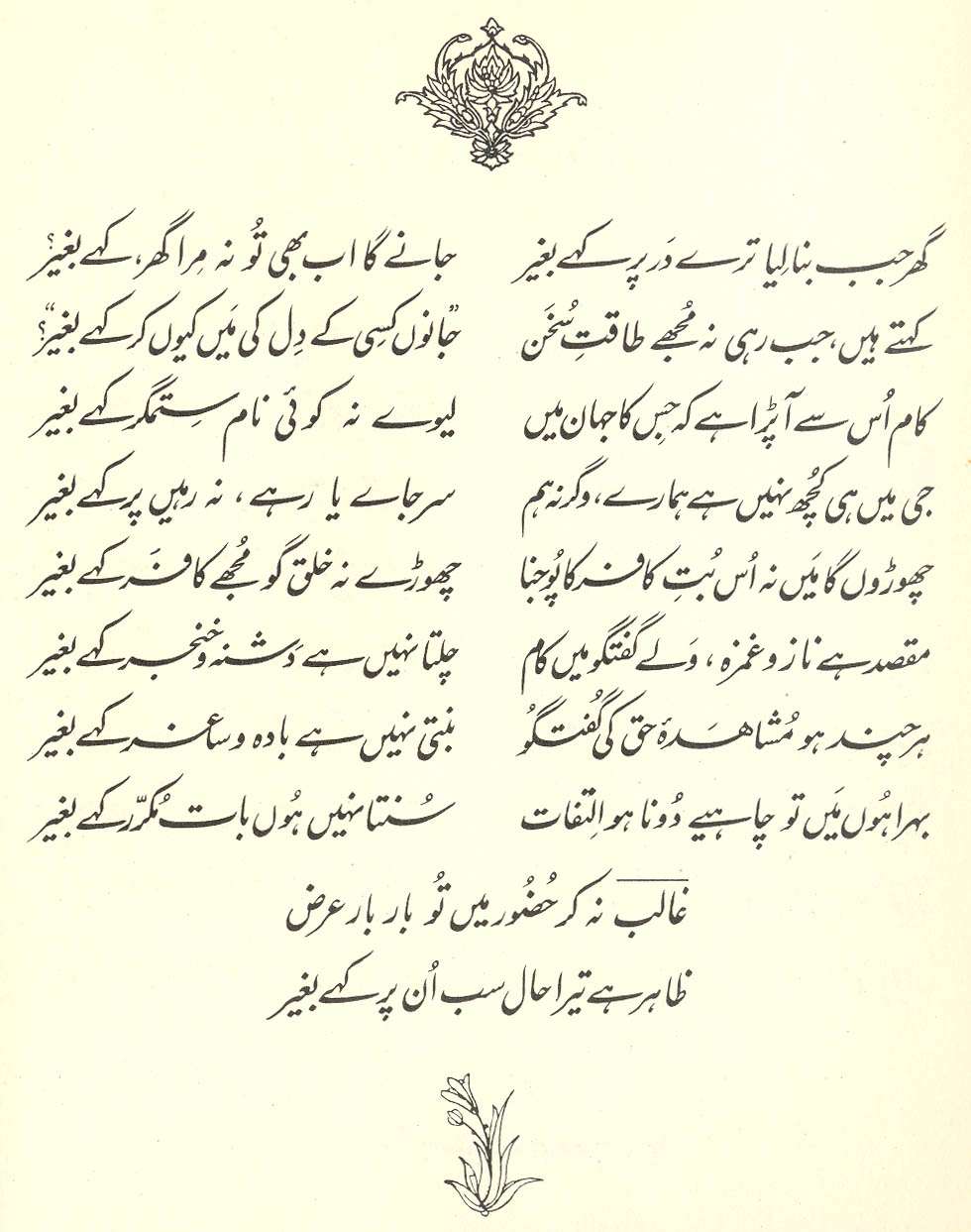
In the language of Delhi, and are quite enough. To use them habitually is also improper and is rejected []. But and and too, although in theory they are correct, are steadily being abandoned. (54-55)
== Nazm page 54 ; Nazm page 55


He says, I'm in love with such a tyranny-practicing beloved that along with her name everyone certainly uses the word 'tyrant'. With such a cruel one, how can anything be accomplished? (102)
In this verse two words, 'world' and 'no one', are worthy of attention. They reveal the widespread fame of the beloved's beauty and cruelty. (130)
At the heart of this verse is the word , with basic meanings of both 'work' (from the Prakritic) and 'desire' (from the Persian and Sanskrit). For further discussion of these meanings, see 22,6 .
The verb , 'to befall, to fall', suggests the strong coercion of fate, and the lover's helplessness to resist or escape. It has simply 'fallen to his lot' to have to deal with and/or love such a person, and he cannot avoid doing so. These suggestions of coercion and helplessness work well, of course, with the fact that the person in question is such a universally acknowledged tyrant or oppressor. To be helplessly forced into a relationship with her is only too appropriate to her basic nature; it is a harbinger of things to come.
It's also amusing to think that not only does everyone in the world know and gossip about the beloved, but also no one ever so much as mentions her name without calling her a 'tyrant'. Tyranny is part of her essence, it's her special identifying feature. It makes her sound like Attila the Hun. (But then, isn't that appropriate?) When people name her, they could be merely gossipping about her-- or they could be worshipping her, or they could be accusing her of a crime (see the definition above).
On the structure of , see 59,1 .
graphics/tyrant.jpg