Verse 4after 1816amhu))e
G3
1
as if anyone asks for news of the harshness-endurers of passion!
2
those people, {step by step / all departed}, became head-to-foot sorrow
is an archaic form of ( GRAMMAR )
'Gone, past, departed; deceased, defunct, lost; -- , adv. Going on, in the act of going, in process of time; step by step, by degrees, gradually; leisurely, easily'.
| References | |
|---|---|
| Arshi, Imtiyaz Ali | Ghazal# 191 |
| Raza, Kalidas Gupta | 302-03 |
| Nuskhah-e-Hamidiyah | 253-254 |
| Hamid Ali Khan | Open Image |
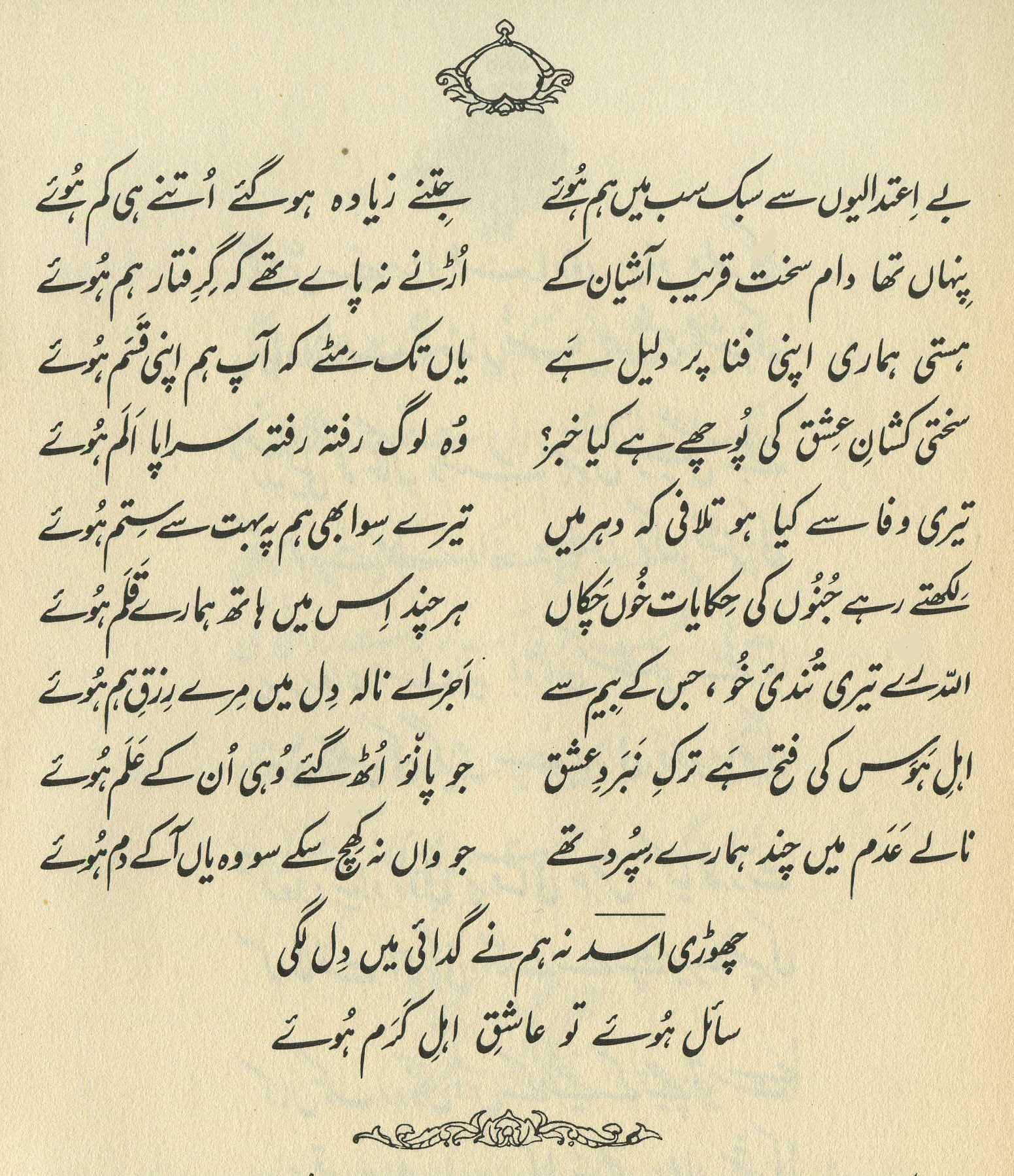
The way sorrow is not apparent and manifest, the same state was that of their sorrow-- that is, those people, melting away, attained oblivion. (181)
== Nazm page 181

He says, 'Why do you inquire about the state of those enduring the harshnesses of passion-- that is, of your own difficulty-afflicted lovers? Those people, as they developed, that is, as they attained oblivion, became head-to-foot sorrow.' The meaning is that the way that sorrow and grief are not apparent and manifest things, this same state has become that of those unfortunates who melt away and become hidden from view. (241)
From the step-by-step change in the lover's situation begins to show itself before the gaze. (325)
Bekhud Mohani is right to point out the central role of , which pulls the whole verse together with great delicacy and sophistication. The literal meaning of is 'gone' or 'departed', and to repeat the word after 'those people' almost looks distributive ('all those departed people'). And then, the general basic meaning of is something like 'by degrees' or 'gradually' (see the definition above), which suggests an answer to the first line (the change in those people is constant and unstoppable, their condition is a foregone conclusion-- why even bother to ask for the latest news?). And one specific meaning of is 'step by step'-- which turns its juxtaposition to 'head-to-foot' [] into a subtle and clever affinity.
The soft sounds of also contribute to a phonetic contrast between the lines: the first line has more harsh, strong consonants (especially in , literally 'harshness-pullers'), the second has softer, milder sounds, as the lovers imperceptibly melt away.
Compare 210,5 , with its very similar emphatically negative rhetorical question or exclamation in the first line, and another form of paradoxical death-in-life for the lovers.
graphics/departed.jpg