Verse 61821iirnahii;N
G5
In this meter the first long syllable may be replaced by a short; and the next-to-last long syllable may be replaced by two shorts.
1
when Generosity/Grace would give leave/permission for boldness and insolence/audacity
2
there is no sin/fault/offense except shame for a sin/fault/offense
'Generosity, liberality; nobleness, excellence; goodness, kindness, benignity; beneficence; bounty; grace, favour, clemency, courtesy, graciousness'.
'Fearlessness, boldness, temerity'.
'Presumption, arrogance, insolence, audacity, assurance, sauciness, rudeness; contempt (of court); cruelty'.
'Shame, &c.'.
'Defect, failure, omission, shortcoming; mistake, error, fault, offence, crime, misdemeanour; guilt, blame'.
| References | |
|---|---|
| Arshi, Imtiyaz Ali | Ghazal# 89 |
| Raza, Kalidas Gupta | 359 |
| Nuskhah-e-Hamidiyah | 113-114 |
| Asi, Abdul Bari | 164 |
| Gyan Chand | 262 |
| Hamid Ali Khan | Open Image |
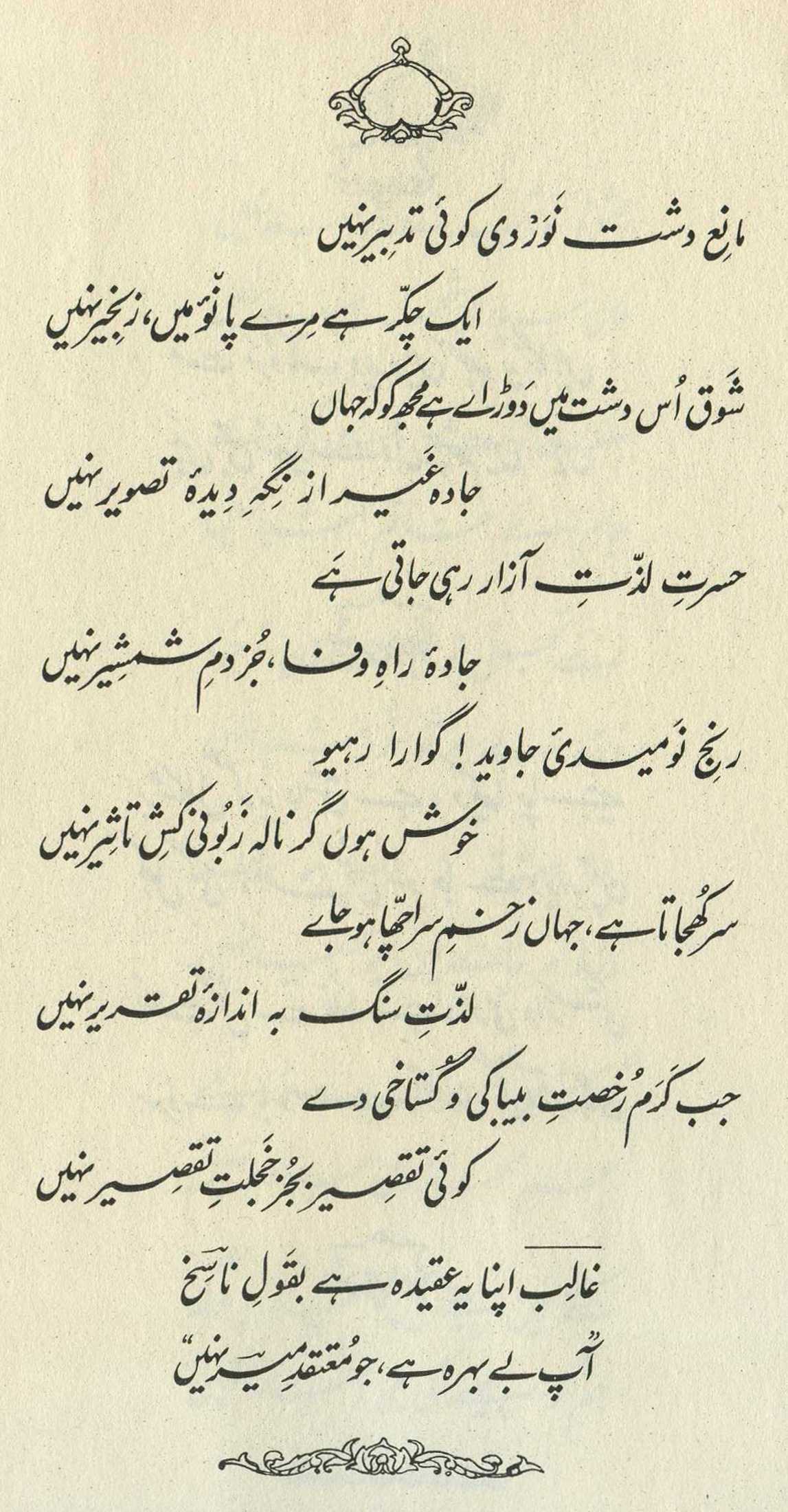
When Generosity would give leave for sin, then except for shame at sins, no sin is a sin. (91)
== Nazm page 91

When Generosity would give permission for mischief, then at that time to hesitate is a very great sin. (82)
He says, when the friend's graciousness would give permission for mischief and shamelessness, then at that time no sin is greater than hesitating to commit a sin. (144)
This verse can be considered to be in reply to the Preacher .
[Or:] When the beloved's manner shows that she won't be angry at shamelessness, then to miss that time is folly: see 188,2 . (188)
On the possibilities of , see 101,1 .
The verse seems to rely on the power of its slightly scandalous theology, and of its paradoxical-looking second line. To redefine 'sin' as 'shame for sin' is radical, no doubt, but in a sort of theologically inbred way. If God would give us permission to commit sins, then wouldn't it be sinful not to take Him up on it? But could God really convert sin into virtue by a wave of His hand, and a virtue (that is, a sense of shame) into a sin? If He could, then would He? The whole tangle of ideas reminds me of the early Christian theological debates over whether evil was evil only because God said it was, or whether God said evil was evil because it really already was evil.
Of course, the speaker could be talking about the beloved this whole time, or he could be, as Bekhud Mohani suggests, replying to the strictures of the Preacher. This verse would then be the speaker's Sufistic justification for wine-drinking, ruining his (worldly) life, pursuing the beloved, etc. If we take 'shamelessness and mischief' in a mild and rakish [] way, they might refer to nothing more than pestering the beloved for a kiss.
This verse doesn't, however, invoke the 'blame-incurring' [] orders of Sufis who deliberately did scandalous things: their theological justification was a desire to cut themselves off from all worldly approval, so that they could throw themselves boldly and trustingly on God's mercy alone. Here, the theology works the other way: God permits and even apparently requires sinfulness (since shame over sin becomes the only sin). In a way, that's an even more perplexing problem with the theology of the verse.
graphics/shame.jpg