Verse 11833arga))ii
G3
1
from the heart, your gaze/glance went down as far as the liver
2
having, in a single/particular/unique/excellent coquetry, made both willing/consenting, it went on/away
'Grace, beauty; elegance; graceful manner on carriage; charm, fascination; blandishment; amorous signs and gestures, coquetry'.
'Willing, wishing, consenting, acquiescing, compliant; permitting'.
| References | |
|---|---|
| Arshi, Imtiyaz Ali | Ghazal# 205 |
| Raza, Kalidas Gupta | 382-83 |
| Hamid Ali Khan | Open Image |
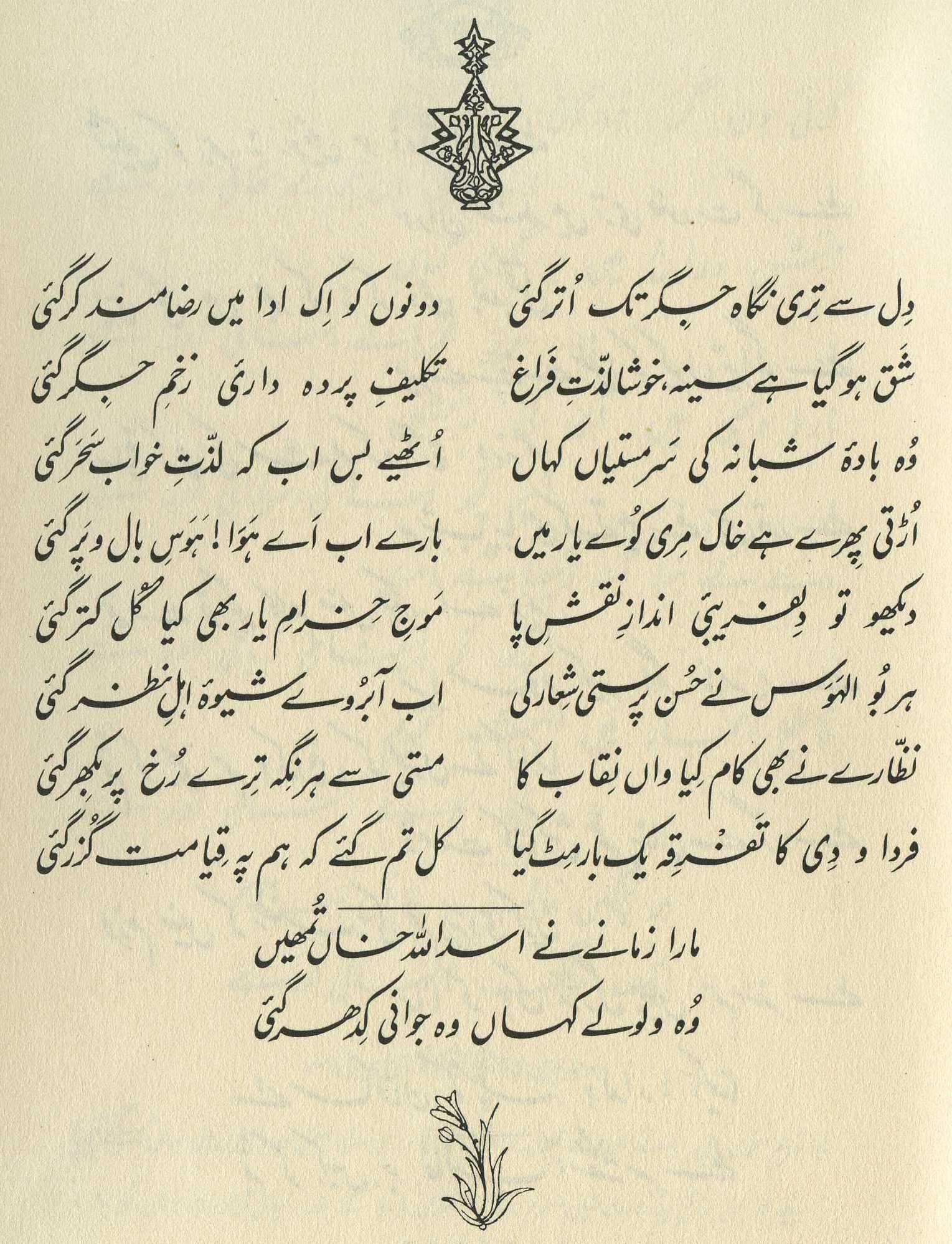
That is, both heart and liver had longed for this arrow. (169)
== Nazm page 169

Compare 30,2 . (60)
He says, your glance, like an arrow, from the heart went and arrived in the liver. And having made both of them willing with one coquetry, it came back []. (226)
Your glance drilled through both heart and liver, and {fulfilled / 'caused to emerge'} [] the longing of both. (302)
The beloved's glance is the ultimate arrow. While in 30,2 the glance-arrow simply pierces both heart and liver, here it does more. First it goes through the heart and then through the liver, making both of them 'willing' or 'consenting' with one single gesture. The heart and liver are separate enough to be two stops in a flight trajectory, but together enough to both respond to a single gesture. Here, they're not just 'pierced' as in {30,2}, but made, more ambiguously, to agree or consent to something. To what? To their own destruction? To an absolute submission to the beloved's will? To share the pain of a single arrow, or the pleasure of a single , between them? The impossibility of deciding is, needless to say, part of the enjoyableness of the verse.
Then after the heart-liver itinerary, the glance-arrow, most characteristically, simply keeps on going, to parts unknown. The verb form -- short for -- makes its continued travel quite clear. (Compare the use of in 97,3 .) Which opens up one more possibility: that the heart and liver were made to 'agree' or 'consent' to the glance-arrow's cruel, fickle onward travel. The beloved's arrow-glance mowed them both down as efficiently as possible, and without even a moment's pause was off to new conquests. Or perhaps, as Bekhud Dihlavi thinks, the ghance then rebounded and returned to the beloved. Oh, the deadliness of that little !
graphics/heartarrow.jpg