Verse 5after 1847aakiye
G3
1
if there would be the power/ability/presumptuousness, then I would ask the dust: 'Oh wretch/miser
2
what did you do to/with those valuable treasures?!'
''What one is able to do or accomplish,' &c.; power, ability; capacity; —means, resources; —presumption, presumptuousness'.
'A vile or worthless fellow; a sordid man, a miser'.
'Weighty, ponderous; precious, of great value, valuable; of noble birth or stock'.
| References | |
|---|---|
| Arshi, Imtiyaz Ali | Ghazal# 221 |
| Raza, Kalidas Gupta | 406 |
| Hamid Ali Khan | Open Image |
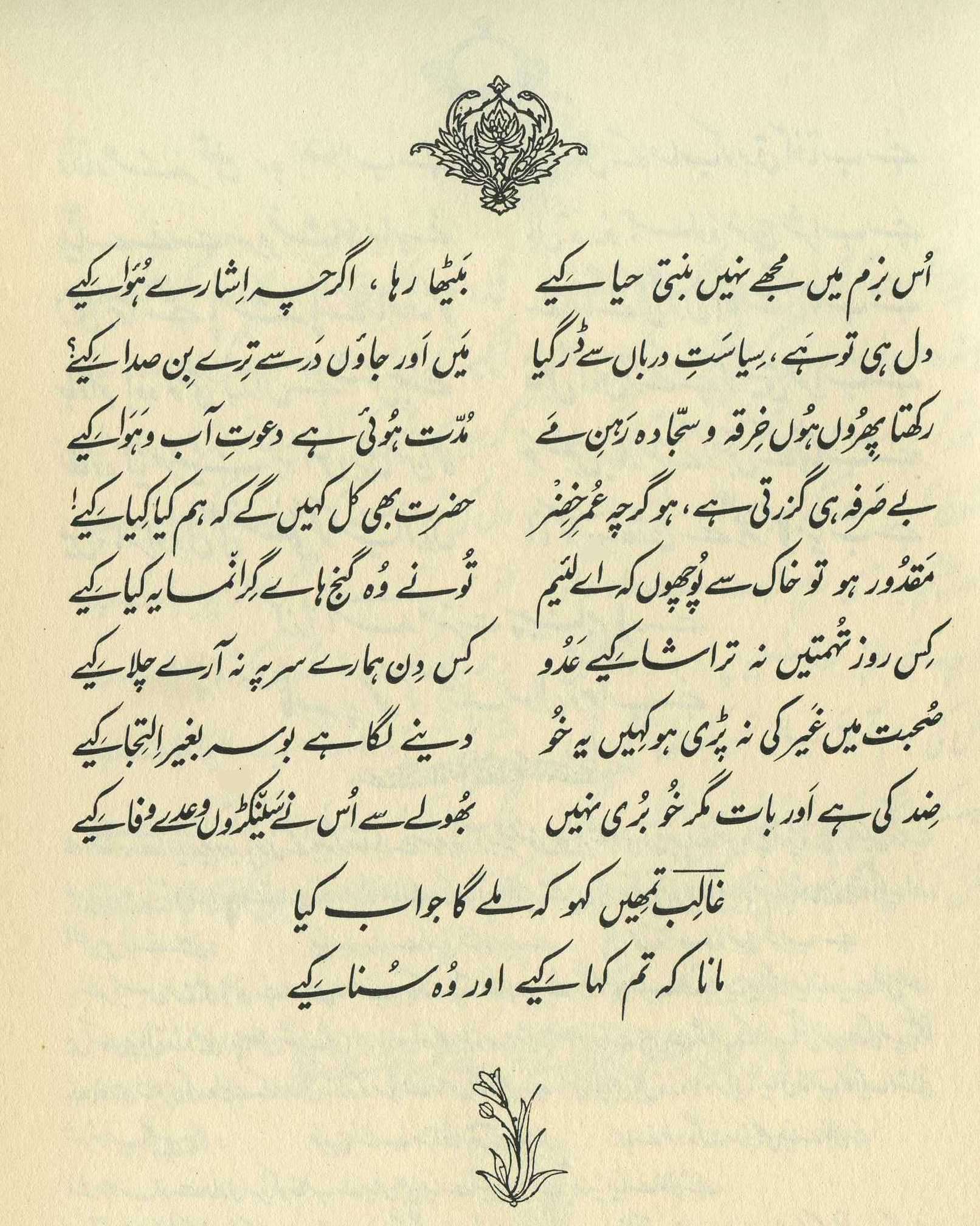
The reference of the has been left unstated, and this is a fault of interpretation. The meaning is, those people who are buried. (162)
== Nazm page 162

He says, if that power would be obtained, then I would certainly inquire from the dust, 'Oh wretch/miser, what did you do with those valuable treasuries?' That is, great people came into your embrace, and you mingled them with the dust, in such a way that not even a trace of any of them remains. (217)
A miser [] would neither take any advantage of his riches himself, nor would he permit anyone else to do so. He has called the earth a 'miser' because when very very great and very very beautiful ones mingled with the dust, there was no advantage to the earth. If they had remained in the world, then the world would have received benefit from them. From saying 'precious treasures' we learn that it's as if having mentioned those people, why would we begin to mention anyone else besides them? And the addressee too understands....
[As for Nazm's criticism,] inference can testify to the poet's intention. Here, keeping the hint obscure is eloquence [] itself, from which emerges the meaning that has been written above. (292)
The best possible use has here been made of the double sense of . If it is taken as a general term of contempt and opprobrium, then the question sounds like that of someone who fantasizes about interrogating a suspected thief: 'Okay, you scum, where did you stash the loot?!' And if it is taken in its specific sense as 'miser', then the reproach is more melancholy: 'Why have you hidden away all those precious treasures, so that not only are we deprived of them, but you don't get any benefit out of them either?'
The double subjunctive suggests considerable tentativeness. Since in this world there seems no need for such tentativeness-- we know all too well that we have no such ability, and the earth won't listen to a word we say-- the utterance may very well be planned for a time after death. Perhaps when the speaker gets into the dust himself, down and dirty with the earth, it will listen to him.
And how can this verse fail to evoke the classic 111,1 ?
graphics/dust.jpg