Verse 21821aamere ba((d
G5
In this meter the first long syllable may be replaced by a short; and the next-to-last long syllable may be replaced by two shorts.
1
for the ministry/post of madness/infatuation, no qualified person remained
2
there was a dismissal of style/elegance and coquetry, after me
'Post, office, station, dignity; ministry; magistracy.' (Platts. p. 1077)
'Mad; distracted (with love), infatuated, enamoured'.
'Receiving, taking; admitting (of, - ), capable (of); sufficient (for); possible, practicable; liable (to); capable, able, clever, skilful, competent, fit, qualified; deserving, worthy; --a fit or competent person, an able man, &c.'.
'Removal (from office), dismissal; deposition; dethronement; --disgrace'.
| References | |
|---|---|
| Arshi, Imtiyaz Ali | Ghazal# 57 |
| Raza, Kalidas Gupta | 330 |
| Nuskhah-e-Hamidiyah | 100-101 |
| Asi, Abdul Bari | 109-110 |
| Gyan Chand | 194 |
| Hamid Ali Khan | Open Image |
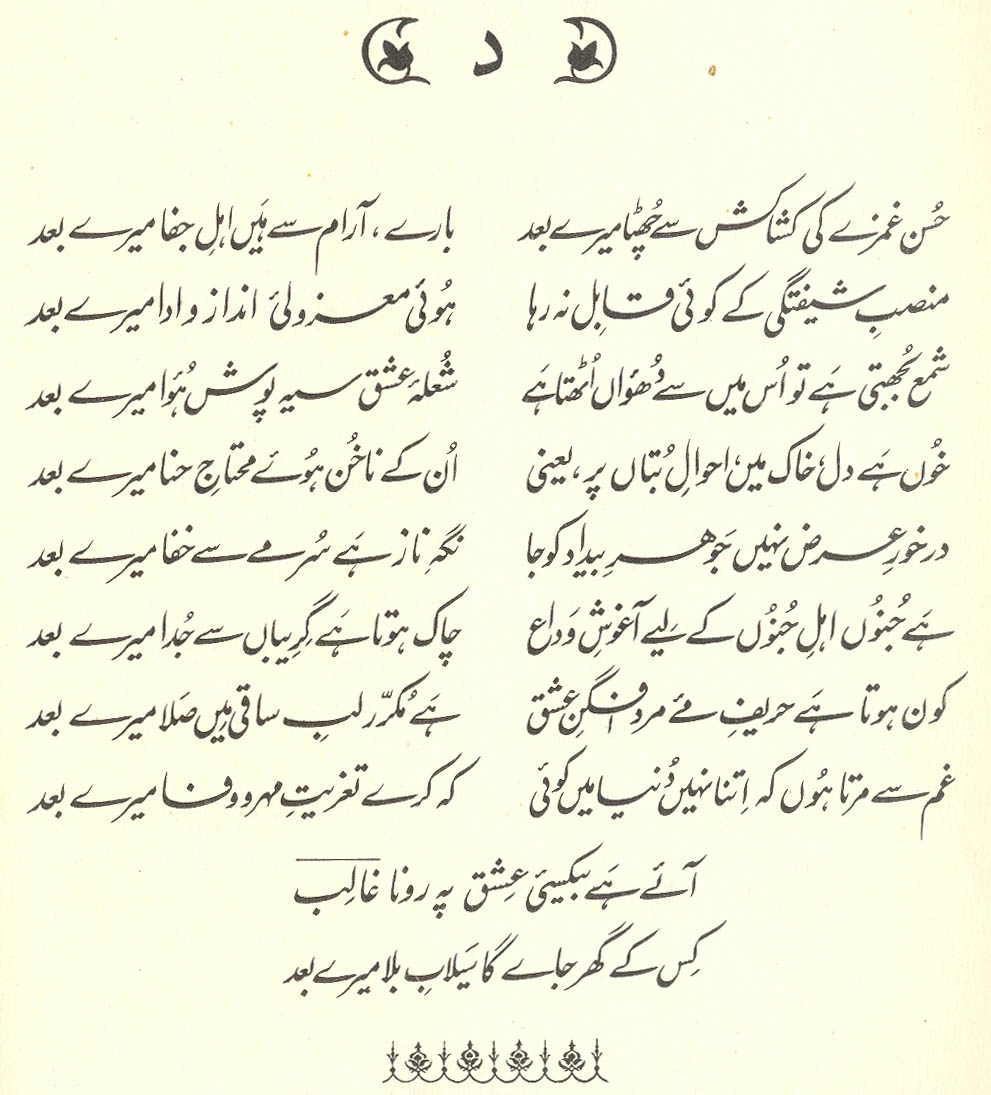
In this verse is for an , otherwise it would have been . (51)
== Nazm page 51 ; Nazm page 52


He says, now no one has remained worthy of the ministry of passion. This post has become empty, and along with that the airs and graces of the beloveds have become useless and void. (97)
Airs and graces sent me (since I was a true lover of the beloveds) down into the dust. As a punishment for this crime, the beloveds dismissed them, for because of their tyranny such a lover no longer remained. (164)
Ghalib doesn't often use bureaucratic imagery, but when he does it's always witty and enjoyable. In this verse the lover imagines a bureaucratic context for the aftermath of his departure (into death). There is turmoil in the ranks of the civil service. No one is now fit to preside over the Ministry of Madness, and the airs and graces have all been dismissed from their posts, with prejudice. In short, the whole administrative apparatus of passion is in utter disarray, its work has all ground to a halt, since the lover has been gone. Without him, how can it function?
For more dead-lover-speaks verses, see 57,1 .
Note for grammar fans: Despite its ending, the modifies someone [] who is masculine singular (because of ). It's that adverbial-looking non-agreeing possession form, like . Notice that Platts explains it especially as going with (see the definition above).
graphics/officeworkmet.jpg