Verse 11833iirse nah ho
G3
1
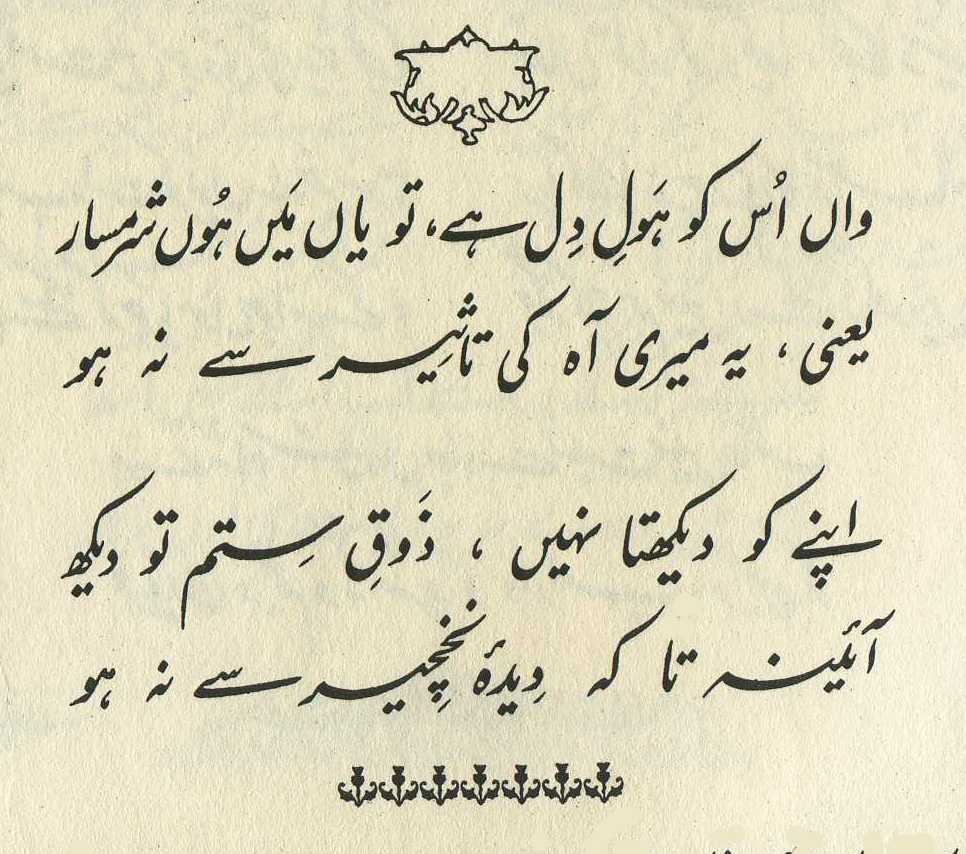
if there, she feels terror in/of the heart, then here, I am ashamed/abashed
2
that is-- may this not be from the effect of my sigh!
'Fright, terror; horror'.
'The making an impression; impression, effect; operation; penetration'.
| References | |
|---|---|
| Arshi, Imtiyaz Ali | Ghazal# 120 |
| Raza, Kalidas Gupta | 381 |
| Hamid Ali Khan | Open Image |
To be apprehensive and distraught is one of the airs of the beloved. (131)
== Nazm page 131

What a fine picture he's captured of the enthusiasm of love! If the beloved experiences any trouble or sickness, then the lover always considers this to be the effect of his sigh or prayer or the emotion of his heart. (184-85)
That is, he feels shame: may the beloved not be troubled-- and then, because of me! He speaks of his condition: if there's no effect on her, then he would remain anxious; now that she's experiencing difficulty, then he is ashamed: may it not be because of my sigh! No matter what, there's no way he has any peace. (247)
For the lover it's a 'damned if you do, damned if you don't' situation, as Bekhud Mohani points out. If the lover is in the classic situation of helplessness-- sighing in vain, unable to move the beloved's stony heart-- then he suffers. And if he sees even the slightest chance that he really has moved her-- perhaps his sigh has become a terrifying windstorm, just as his tears have flooded cities (as in 111,16 )-- then he feels guilty and ashamed at causing her such trouble and vexation. From the verse, of course, we have no reason to believe that his fear of upsetting her has any basis at all, other than his own desperate wishful thinking.
The poor lover-- in his excessive scrupulousness he's contrived a way to be miserable no matter what happens. His casuistry is so ludicrous that the effect is both exasperating (oh, get a life!) and genuinely amusing. After all, he's the misery-experiencing subject-- but then, isn't he also the wry voice ruefully observing and reporting his own misery?
There's also an enjoyable ambiguity created by the in -- the beloved feels some kind of fear or terror 'in' or 'of' or 'pertaining to' the heart. Does she simply feel it 'in' her heart, so that we know only its location? Or is it a terror 'of' the heart? In the latter case, it might be some alarm over her own heart (what if she might actually succumb to passion herself?); or else over the lover's heart (what might that madman be capable of?). However we read it, the only guaranteed outcome is the lover's self-generated, self-renewing misery.
graphics/windstorm.jpg